
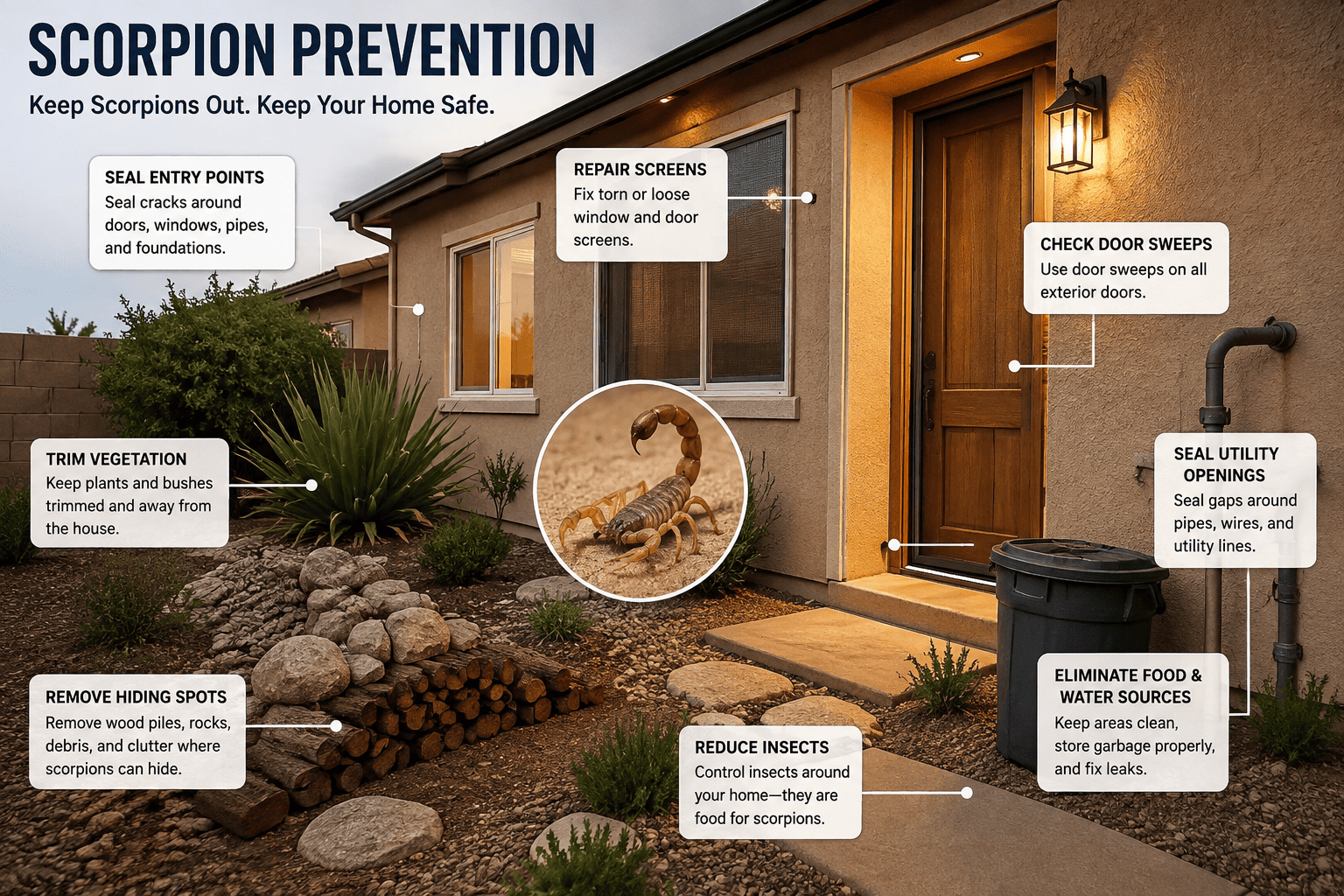
Scorpion Prevention: How to Keep Scorpions Out of Your Home and Yard
Finding a scorpion inside your home can be unsettling, especially when you are not sure how it got there. The good news is that you can greatly reduce the chances of scorpions entering your home by making a few changes around the house, yard, garage, and other areas where they may hide.
Effective scorpion prevention is not about finding one magic spray or product. It is about making your property less attractive to scorpions and blocking the places they use to get inside.
Scorpions are good at finding small hiding places and can squeeze through surprisingly narrow gaps. They may enter through cracks around doors and windows, gaps in walls, plumbing openings, vents, or other openings connected to the outside.
This guide explains practical ways to prevent scorpions around your home, how to seal common entry points, reduce hiding places, control insects, and make your yard less inviting to them.
Why Do Scorpions Come Near Homes?
Scorpions usually do not enter homes because they are attracted to people. They are looking for things they need to survive, including food, water, shelter, and suitable temperatures.
A home can provide several of these at the same time.
Outdoor lights can attract insects at night, which may provide a food source for scorpions. Wood piles, rocks, dense vegetation, clutter, and other sheltered areas can also give them places to hide during the day.
Once scorpions are active around a house, small gaps and openings can give them a way inside.
That is why prevention needs to address both the inside and outside of the property.
Scorpion Prevention: Start by Sealing Entry Points
One of the most important steps is preventing scorpions from getting inside in the first place.
Walk around your home during daylight and look closely at areas where different materials meet. Pay particular attention to doors, windows, walls, pipes, vents, and areas around utility lines.
Check Doors and Door Frames
Exterior doors are one of the easiest places for small pests to enter.
Check the bottom of every exterior door for a visible gap. A damaged or missing door sweep can leave enough space for insects and scorpions to get underneath.
Replace worn door sweeps and make sure the door closes tightly against the frame.
Also inspect the sides and top of the door frame. Cracks or gaps around the frame should be sealed with an appropriate exterior-grade sealant.
Seal Cracks Around Windows
Inspect window frames, screens, and surrounding walls.
Repair damaged screens and replace screens that no longer fit tightly. Look for gaps between the frame and the wall, particularly around older windows.
Weatherstripping can help close small gaps around movable window sections.
Inspect Utility Openings
Pipes, cables, electrical lines, and other utilities can create openings through exterior walls.
Check where these lines enter the house. If you see a gap around a pipe or cable, seal it using a suitable material for that location.
Do not block vents or openings that are required for ventilation or appliance safety.
Keep Scorpions Away From Doors and Windows
Even when your house is well sealed, the areas immediately around doors and windows can still attract insects and other pests.
Outdoor lights are particularly important.
Many insects are attracted to artificial light at night. Since insects can become prey for scorpions, heavy insect activity around doors and windows can create a better feeding area for them.
Consider using motion-activated lighting where practical and avoid leaving unnecessary exterior lights on throughout the night.
Keep vegetation from touching doors and windows as well.
Reduce Outdoor Hiding Places
Scorpions spend much of their time hiding during the day.
A cluttered yard can provide plenty of hiding places.
Remove unnecessary piles of:
- Firewood
- Cardboard
- Building materials
- Yard debris
- Loose boards
- Large pieces of fabric
- Unused containers
- Rocks and other debris
If you need to store firewood outside, keep it elevated and away from the exterior walls of the home when possible.
Always use caution when moving outdoor materials because a scorpion may be hiding underneath.
Keep Grass and Vegetation Under Control
Dense vegetation close to the house can create shelter for insects and other small animals, which may indirectly provide food opportunities for scorpions.
Trim plants away from exterior walls, doors, and windows.
Keep grass reasonably maintained and remove excessive vegetation from areas immediately next to the foundation.
This does not mean you need to remove every plant from your yard. The goal is to avoid creating a continuous sheltered pathway directly against the house.
Control the Insects Around Your Home
Scorpions are predators. They feed on insects and other small animals.
If your property has a large insect population, it may provide a reliable food source for scorpions.
Look for the reasons insects are gathering around your home.
Common problems include:
- Standing water
- Outdoor lights left on all night
- Overgrown vegetation
- Unsealed garbage containers
- Food waste
- Excess moisture
- Compost or organic debris
- Cracks and openings where insects enter
Reducing the number of insects around the house can make the area less attractive to scorpions.
Fix Water and Moisture Problems
Although scorpions can survive in dry environments, they still need access to moisture.
Leaking outdoor faucets, irrigation problems, clogged drains, and excessive watering can create conditions that attract insects and other pests.
Check for:
- Leaking hose connections
- Broken irrigation lines
- Water collecting near the foundation
- Leaking air-conditioning equipment
- Poor drainage
- Overwatered garden areas
Fixing these problems can help reduce pest activity around the property.
Make Your Garage Less Attractive to Scorpions
Garages can provide excellent hiding places because they are usually dark, quiet, and full of stored items.
Avoid keeping unnecessary clutter directly on the floor.
Use sealed storage containers instead of loose cardboard boxes when practical. Keep storage areas organized so you can easily inspect them.
Pay special attention to the garage door. Check the rubber seal along the bottom and replace it if it is damaged or no longer makes good contact with the floor.
Also inspect cracks around walls, doors, and utility openings.
Prevent Scorpions in Sheds and Outdoor Buildings
Sheds, workshops, storage rooms, and other outdoor structures can attract scorpions for the same reasons as garages.
Keep these spaces organized and reduce unnecessary clutter.
Seal gaps around doors and inspect the structure periodically for cracks or openings.
Do not assume that a building is scorpion-proof simply because it is separate from the main house. If insects can enter, scorpions may eventually follow their food source.
Check Your Roof and Attic Areas
Scorpions can sometimes reach higher parts of a building, particularly where there are connected structures, vegetation, roof access, or openings around vents.
Inspect roofline areas for damaged screens, gaps, and openings.
Trim tree branches that provide easy access to the roof when appropriate.
Attic vents should have intact screening while still allowing proper ventilation.
If you regularly find scorpions in an attic or upper floor, look for the route they may be using rather than simply removing the individual scorpions.
Keep Bedrooms and Living Areas Clutter-Free
Inside the home, scorpions can hide underneath or behind objects that are rarely disturbed.
Keep floors reasonably clear and avoid leaving piles of clothing, shoes, bags, or other items on the floor overnight.
Before putting on shoes that have been left outside or in a garage, check them first.
This is particularly important in areas where scorpions are common.
Be Careful With Bedding and Furniture
Scorpions generally prefer dark hiding places rather than open areas.
Beds and furniture placed directly against walls can sometimes provide sheltered spaces where pests can move unnoticed.
Keep bedding from hanging onto the floor.
If you are in an area with frequent scorpion activity, inspect bedrooms periodically, especially along baseboards, behind furniture, and around doors and windows.
Pay Attention to Bathrooms and Plumbing Areas
Bathrooms can occasionally provide attractive conditions because of moisture and plumbing openings.
Inspect areas around pipes, cabinets, toilets, and wall penetrations.
Look for gaps where plumbing passes through walls or floors.
Do not seal plumbing or ventilation openings in a way that creates a safety or maintenance problem. When in doubt, use an appropriate professional to address the opening.
What About Drains?
People sometimes assume scorpions routinely come directly through household drains.
In many situations, the more important issue is the surrounding plumbing and structural openings rather than the drain itself.
If you repeatedly find scorpions around bathrooms, laundry areas, or other plumbing locations, inspect the area for cracks, gaps, pipe penetrations, and openings leading toward the outside.
The goal is to identify the actual route into the room.
Seal Cracks Around the Foundation
Walk around the outside of your home and inspect the foundation.
Look for cracks and gaps around:
- Foundation walls
- Door thresholds
- Windows
- Pipes
- Electrical conduits
- Utility lines
- Vents
- Exterior fixtures
Small openings can be easy to overlook.
Sealing appropriate gaps can help reduce entry points for scorpions as well as insects and other pests.
Do Scorpion Screens and Door Sweeps Help?
Yes. Physical barriers can be an important part of scorpion prevention.
Fine-mesh screens can help keep insects and other pests outside, while properly fitted door sweeps can reduce gaps underneath exterior doors.
The key is proper installation.
A screen with a large tear or a door sweep that does not touch the floor will not provide much protection.
Inspect these barriers regularly because weather, pets, and normal wear can damage them.
Should You Use Pesticides for Scorpion Prevention?
Pesticides can sometimes be part of a broader pest-management program, but they should not be considered the only solution.
Spraying without addressing entry points, insects, clutter, and outdoor hiding places may provide only temporary results.
If chemical treatment is needed, follow the product label carefully and use products only for their intended purpose.
For recurring or heavy infestations, a licensed pest-control professional can inspect the property and determine where scorpions and their prey are coming from.
What About Natural Scorpion Repellents?
There are many products and home remedies marketed as natural scorpion repellents.
Some may seem appealing, but evidence for many homemade remedies is limited.
Rather than depending on a single scent, oil, plant, or household ingredient, focus first on physical exclusion, habitat management, insect control, and moisture reduction.
These steps address the reasons scorpions are able to live around the property in the first place.
Can Lights Attract Scorpions?
Outdoor lighting does not necessarily attract scorpions directly.
The bigger concern is that lights can attract insects.
Those insects can then become a food source for scorpions.
If you regularly see scorpions near a porch, garage entrance, or outdoor light, reducing nighttime insect activity in that area may help.
Motion sensors and strategically placed lighting can reduce unnecessary illumination around entrances.
How Often Should You Check for Scorpions?
There is no universal inspection schedule that works for every property.
Homes in areas with frequent scorpion activity may benefit from regular seasonal inspections, particularly before and during periods when scorpions become more active.
After heavy rain, extreme weather, landscaping changes, or construction work, inspect the property again.
Pay attention to locations where you have previously found scorpions.
Repeated sightings in the same area are useful clues because they may indicate a nearby hiding place or entry point.
A Simple Scorpion Prevention Checklist
You do not have to change everything around your home in one day.
Start with the areas that are most likely to make a difference.
Outside the Home
- Seal cracks and gaps around the foundation.
- Repair damaged window screens.
- Install or replace worn door sweeps.
- Keep vegetation trimmed away from walls.
- Remove unnecessary yard debris.
- Store firewood away from the house when possible.
- Reduce standing water and excess moisture.
- Keep outdoor storage areas organized.
- Reduce insect activity around entrances.
- Inspect outdoor structures regularly.
Inside the Home
- Keep floors and storage areas reasonably uncluttered.
- Check shoes before wearing them if they have been left outside.
- Inspect garages and storage rooms.
- Seal appropriate gaps around pipes and utility openings.
- Check doors and windows for gaps.
- Keep bedding off the floor.
- Inspect areas where scorpions have previously been found.
What Should You Do If You Keep Finding Scorpions?
Finding one scorpion does not necessarily mean you have a major infestation.
However, repeated sightings are worth investigating.
Instead of removing each scorpion and stopping there, ask:
Where is it coming from?
Check the nearest exterior wall, door, window, plumbing opening, garage, crawl space, yard debris, or other potential hiding area.
If you continue finding scorpions despite taking reasonable prevention steps, consider having the property inspected by a qualified pest professional.
A professional can look for entry points and conditions that may be difficult to identify on your own.
How to Prevent Scorpions in Different Parts of the Property
Different areas require slightly different approaches.
Bedroom
Keep clothing and shoes off the floor and check gaps around doors and windows.
Bathroom
Look for plumbing penetrations, cracks, moisture problems, and gaps around windows or exterior walls.
Kitchen
Keep food and garbage properly contained and address insect activity, leaks, and cracks.
Garage
Reduce clutter, use organized storage, and check the garage-door seal.
Attic
Inspect vents, roofline openings, screens, and potential access points.
Yard
Reduce debris, excessive vegetation, standing water, and outdoor insect activity.
Shed
Keep stored materials organized and seal gaps around doors and walls.
Scorpion Prevention Is About the Whole Property
One of the biggest mistakes homeowners make is focusing only on the room where they found a scorpion.
If you find one in a bathroom, for example, the source may be outside the bathroom entirely.
The scorpion may have entered through an exterior wall, followed an insect food source, moved through a structural opening, or simply found a small gap near a door or window.
That is why effective prevention works best as a property-wide approach.
Think about the home as a connected system.
Seal the entrances. Reduce hiding places. Control insects. Manage moisture. Keep the yard maintained. Then monitor the property.
When Should You Call a Pest Professional?
Professional help may be appropriate when scorpion sightings become frequent, when you cannot find the source, or when someone in the household is particularly vulnerable to a sting.
A pest professional can inspect the structure and surrounding property for conditions that encourage scorpion activity.
If professional treatment is recommended, ask what areas will be treated, what preparation is required, and what precautions people and pets should follow.
You should also make sure any pesticide application complies with local laws and label directions.
Final Thoughts: A Better Approach to Scorpion Prevention
Good scorpion prevention starts outside the home and continues inside.
You do not need to make your property completely sealed or remove every plant from your yard. Instead, focus on the areas that give scorpions the easiest opportunities to survive and enter your home.
Seal gaps around doors, windows, foundations, pipes, and utility openings. Keep outdoor areas free from unnecessary hiding places, manage moisture, reduce insect activity, and keep garages and storage spaces organized.
If you keep finding scorpions, do not just remove the ones you see. Look for the reason they are there.
A consistent prevention routine can make your home less attractive to scorpions and reduce the chances of unwanted encounters over time.
The goal is simple: make it harder for scorpions to get in, harder for them to hide, and less rewarding for them to stay.
Frequently Asked Questions About Scorpion Prevention
What is the best way to prevent scorpions from entering a house?
The best approach is a combination of sealing entry points, repairing screens and door sweeps, reducing outdoor hiding places, controlling insects, and managing moisture around the property.
What attracts scorpions to a house?
Scorpions may be found around homes because of shelter, insects and other prey, moisture, and access to protected spaces. Outdoor lighting can indirectly contribute by attracting insects.
Does keeping the yard clean prevent scorpions?
A clean, well-maintained yard can reduce hiding places and conditions that support scorpions and their prey. It does not guarantee that scorpions will never appear.
Can scorpions climb walls?
Some scorpion species can climb certain rough or textured surfaces. Smooth surfaces may be more difficult for them, but homeowners should not rely on smooth walls as a barrier.
Does sealing cracks really help?
Yes. Sealing appropriate cracks and gaps can reduce the number of potential entry points for scorpions and many other household pests.
How do I keep scorpions out of my bedroom?
Check doors and windows for gaps, keep bedding and clothing off the floor, reduce clutter, inspect nearby walls and baseboards, and address potential entry points around the exterior of the room.
Will getting rid of insects get rid of scorpions?
Reducing insects can reduce available prey, but it does not guarantee that scorpions will disappear. Physical exclusion and habitat management are also important.
Are natural scorpion repellents effective?
Evidence varies widely among natural products and home remedies. Physical barriers, sealing entry points, reducing shelter, and managing prey are generally more dependable parts of a prevention strategy.
Should I spray my house for scorpions?
Chemical treatment may be useful in some situations, but spraying should be part of an overall pest-management approach rather than the only prevention method. Always follow the pesticide label.
How can I prevent scorpions around my garage?
Keep the garage organized, reduce clutter, seal cracks and gaps, maintain the garage-door seal, and reduce insect activity around the entrance.