
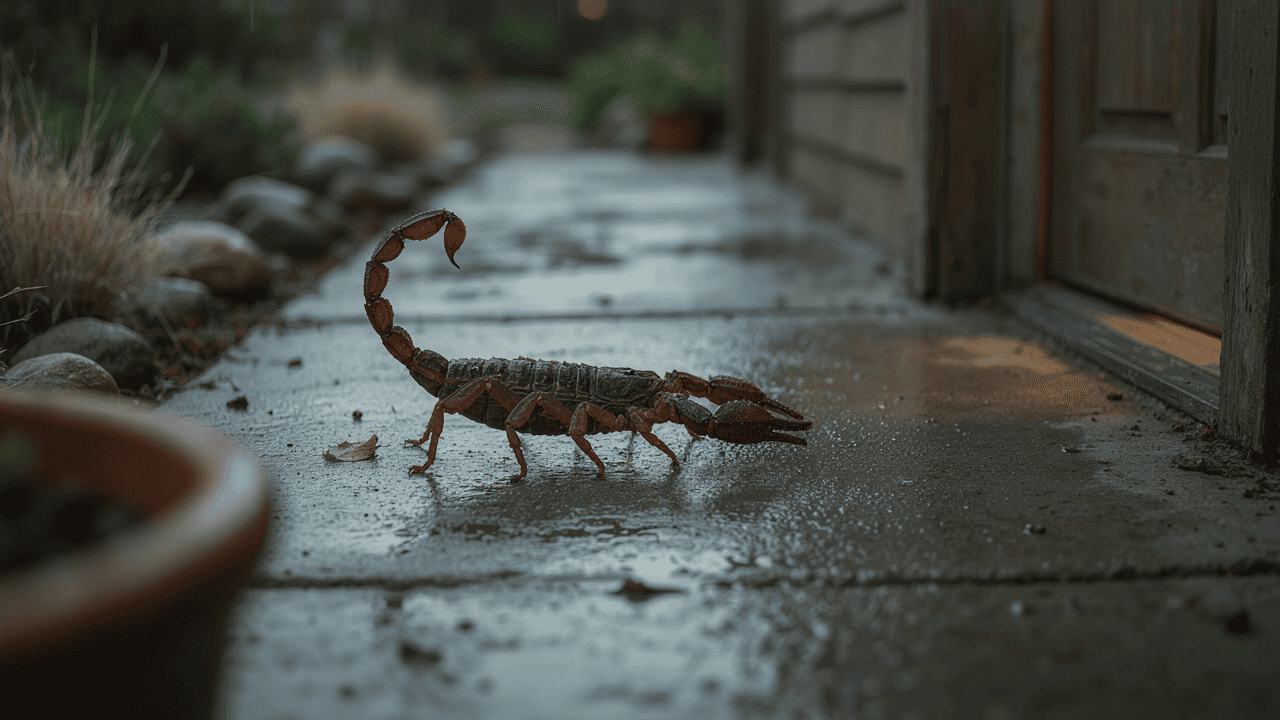
Scorpions Come Inside the House After Rain: Why It Happens
Why do scorpions come inside the house after rain? Heavy rain can change the places where scorpions normally hide, especially when water reaches burrows, cracks, soil, rocks, or other sheltered areas. When their outdoor hiding places become wet or disturbed, some scorpions may move toward nearby protected areas, including homes, garages, sheds, and other buildings.
Seeing a scorpion after a storm can be unsettling, but it does not automatically mean your house is infested. Scorpions are usually trying to find shelter, food, moisture, or a safer place to move around. The important thing is to understand why they are getting close to your home and fix the conditions that make it easy for them to enter.
What Happens to Scorpions During Heavy Rain?
Scorpions spend much of the daytime hidden under rocks, boards, debris, bark, cracks, or in burrows. They become more active at night, particularly in warm conditions.
Heavy rain can disturb these hiding places. Water may enter low areas, wash through loose soil, or move debris around. In some regions, especially parts of the desert Southwest, scorpion activity around homes can increase during summer rains and monsoon conditions. University of Arizona Cooperative Extension notes that homes near normally dry riverbeds, arroyos, and other areas can experience an influx of scorpions during summer rains.
This does not mean every scorpion runs into a house whenever it rains. Weather is only one factor. The type of scorpion, local habitat, temperature, moisture, food availability, and the condition of the home all matter.
A house that is well sealed may remain completely free of indoor scorpions even after a major storm. Another home with gaps around doors, windows, pipes, or the foundation may have several encounters.
Why Do Scorpions Come Inside the House After Rain?
The main reason is usually shelter.
A scorpion does not enter a home because it wants to live with people. It may simply be moving away from a disturbed outdoor hiding place and happen to find an opening into a garage, crawl space, patio, basement, or living area.
Several conditions can make this more likely.
1. Rain Disturbs Their Hiding Places
Scorpions often hide in protected outdoor locations. Rocks, wood piles, boards, wall gaps, landscaping materials, and other objects can provide shelter.
When heavy rain reaches these areas, the environment changes. Water can enter small spaces, soil can become saturated, and loose material can shift.
A scorpion that was comfortable under a rock or inside another protected space may move to another location.
If your home is nearby, the foundation, garage, patio, or wall can become part of that route.
University of Arizona Cooperative Extension describes scorpions as animals that normally live outdoors but can become indoor pests when conditions around a home provide opportunities for entry.
2. Water Can Flood Low Hiding Areas
Some scorpions use cracks, burrows, and other protected spaces where they can remain hidden during the day.
Heavy rain can send water into low areas and disturb these refuges.
This is particularly important around properties with poor drainage. Water that collects near a foundation, retaining wall, shed, or other structure can change the habitat immediately around the home.
The scorpion may not be searching specifically for your house. It may simply be moving toward another dry and protected area.
Unfortunately, your home can provide exactly that.
3. Your House May Offer Better Shelter
A house provides many protected spaces.
Under a door threshold, behind stored boxes, beneath appliances, inside garages, around wall penetrations, and underneath outdoor furniture are just a few examples.
After rain, these places may become more attractive than exposed ground.
This is one reason sealing your home is so important. University of Arizona guidance recommends tight-fitting door sweeps and weather-stripping, removing debris near the home, and keeping potential hiding places away from the structure.
4. Rain Can Increase Scorpion Movement at Night
Scorpions are generally nocturnal. They are more active after dark than during the daytime.
If a storm passes during the evening and temperatures remain suitable, you may notice more activity around patios, walls, walkways, garages, and other areas.
This can make it seem as though rain “created” scorpions around the house.
It did not.
The rain may simply have changed their movement patterns or disturbed places where they were already living.
Some research and field observations of Arizona bark scorpions have documented movement after irrigation or monsoon rains when scorpions are displaced from refuge areas.
How Do Scorpions Get Into a House After Rain?
A scorpion does not need a large opening to get indoors.
Small gaps around doors, windows, pipes, utility lines, vents, foundations, and other structural openings can provide access.
A damaged screen or worn door sweep can also leave an easy route.
This is why finding a scorpion indoors after rain is a good reason to inspect the outside of the house.
Look closely at:
- Gaps underneath exterior doors
- Damaged door sweeps
- Cracks around windows
- Torn window screens
- Openings around plumbing pipes
- Utility penetrations
- Cracks around the foundation
- Garage door gaps
- Gaps around exterior vents
- Cracks in walls or masonry
- Spaces around outdoor structures attached to the home
You do not need to find the exact opening immediately. Start by looking for places where the outside environment connects directly to the inside.
Where Are You Most Likely to Find Scorpions After Rain?
The location depends on how the scorpion entered and what areas provide shelter.
Garages are common places to check because garage doors can have gaps along the bottom and sides.
Sheds and storage buildings can also attract scorpions because they often contain boxes, tools, wood, debris, and other hiding places.
Inside the home, check areas close to exterior walls and entry points.
You may also find a scorpion near:
- Bathrooms
- Laundry rooms
- Kitchens
- Closets
- Basements
- Entryways
- Garages
- Bedrooms
- Under furniture
- Near doors
- Around stored belongings
Arizona bark scorpions are capable climbers and can move across walls and ceilings. University of Arizona research also notes that they may end up in sinks, bathtubs, beds, and other indoor locations.
That is why simply checking the floor is not always enough.
Are Scorpions More Active at Night After Rain?
They can be.
Scorpions are primarily nocturnal, so nighttime is when you are most likely to encounter one moving around.
Rain can add another reason for increased movement if it has disturbed their hiding areas.
Warm weather can also contribute to activity. In Arizona, for example, scorpion activity is strongly associated with warm nighttime temperatures.
If you live in an area where scorpions are common, take extra care after a storm.
Turn on outdoor lights before walking across patios or yards. Wear shoes rather than walking barefoot. Check shoes and clothing that have been left outside or on the floor.
A flashlight can also help you see where you are stepping.
Why Do You Sometimes See More Than One Scorpion?
Finding one scorpion does not automatically mean there are dozens inside your house.
However, seeing several scorpions over a short period deserves attention.
Multiple sightings may indicate that the property provides good habitat or that several entry points are available.
There may also be plenty of prey around the house.
Scorpions feed on insects, spiders, centipedes, and other small animals. If your property has a large population of insects, it can provide a useful food source for scorpions.
For example, a home with lots of crickets around exterior lights may be more attractive to hunting scorpions than a home with very little insect activity.
Instead of only dealing with each scorpion you see, look at the bigger picture.
Ask:
Where are they coming from?
What are they eating?
Where are they hiding?
How are they getting inside?
What changed around the property recently?
Those questions can tell you much more than simply removing the scorpion.
Does Rain Cause a Scorpion Infestation?
Not by itself.
Rain does not create an infestation.
A storm can disturb scorpions that were already living around the property, and it can temporarily increase movement. If your home has easy entry points, some of those scorpions may get inside.
The more important issue is what happens afterward.
If you continue finding scorpions several days or weeks after the rain, inspect the property for conditions that allow them to remain nearby.
Look for:
- Outdoor debris
- Wood piles
- Rock piles
- Dense vegetation
- Insect activity
- Water or moisture problems
- Openings around the foundation
- Gaps around doors
- Damaged screens
- Outdoor storage close to the house
- Gaps around garage doors
University of Arizona pest-proofing guidance specifically recommends removing or relocating loose boards, rocks, wood piles, and debris away from the home and maintaining tight door sweeps and weather-stripping.
If you frequently notice scorpions around bathrooms at night, read our guide on Why Are Scorpions in My Bathroom at Night?
What Should You Do If You Find a Scorpion After Rain?
First, give it space.
Do not reach toward it with your bare hands.
If you can safely leave the area, do so and keep children and pets away until the scorpion has been removed or the area has been checked.
If you are comfortable removing it, use a method that keeps your hands away from the animal. Poison Control recommends protective footwear and long tongs if a scorpion needs to be captured.
You can also contact a pest professional if you do not feel comfortable handling the situation yourself.
After the scorpion is gone, do not stop there.
Check how it might have entered.
Finding the entry point is often more useful for long-term prevention than simply killing one scorpion.
How to Keep Scorpions Out After Heavy Rain
The best approach is to make your home difficult to enter and less attractive to scorpions.
Seal Exterior Doors
Check the bottom of every exterior door.
If you can see daylight underneath the door, the seal may need attention.
Install or replace a properly fitted door sweep and check the weather-stripping around the frame.
This is one of the simplest improvements you can make.
Repair Window Screens
Look for small holes or loose edges around screens.
A damaged screen can provide an easy entry point for many small pests, including scorpions.
Pay particular attention to windows that remain open during warm weather.
Seal Cracks and Openings
Inspect the foundation and exterior walls.
Seal appropriate cracks and gaps around the structure, especially near ground level.
Also inspect areas where pipes, cables, and other utilities enter the house.
Keep Debris Away From the House
Move piles of rocks, boards, firewood, and other materials away from exterior walls.
These objects provide potential hiding places and can make it harder to inspect the area around your home.
The University of Arizona recommends reducing loose boards, woodpiles, rocks, and debris immediately next to the home.
Reduce Insects Around the Property
If insects are abundant around your home, scorpions may have more opportunities to hunt.
Outdoor lighting can attract insects, which can indirectly create a better feeding area for nocturnal predators.
Keep outdoor areas clean and address obvious insect problems.
Do not assume that spraying everything with pesticide is the answer. Poison Control notes that preventative pesticide spraying for scorpions may not work reliably.
Fix Drainage Problems
Pay attention to places where rainwater collects next to your house.
If water repeatedly pools near the foundation, address the drainage problem where possible.
Good drainage can reduce moisture problems and make the area around your home less suitable for a variety of pests.
Keep Outdoor Items Off the Ground When Possible
Shoes, clothing, towels, gloves, boxes, and other items left outside can become temporary hiding places.
Shake out shoes and clothing before using them if they have been left outside or on the floor.
This is especially important in areas where scorpions are common.
What About Scorpions After a Flood or Very Heavy Storm?
A major storm can cause much more disruption than ordinary rainfall.
Flooding, runoff, and landscape changes can move animals and disturb their normal shelter.
This is especially relevant for homes near washes, arroyos, riverbeds, rocky areas, undeveloped land, or recently disturbed ground.
Do not assume every scorpion appearing after a flood has come from inside the house.
It may have been displaced from its normal outdoor habitat.
At the same time, check your home carefully because damaged doors, screens, walls, drainage systems, or other structures may create new entry points.
If the property has suffered storm damage, address structural problems first.
Should You Spray for Scorpions After Every Storm?
Usually, spraying every time it rains is not a good long-term strategy.
The better approach is to identify why scorpions are reaching the property and why they can enter.
Start with exclusion:
- Seal doors.
- Repair screens.
- Close foundation gaps.
- Remove outdoor hiding places.
- Reduce insect activity.
- Keep firewood away from the house.
- Improve drainage.
- Inspect garages and sheds.
- Check outdoor belongings before bringing them inside.
If scorpions continue appearing despite these steps, a qualified pest professional can inspect the property and recommend treatment based on the local species and conditions.
When Should You Call a Pest Professional?
Occasional sightings do not always require professional treatment.
However, professional help may make sense if you repeatedly find scorpions inside despite taking reasonable prevention steps.
Consider getting an inspection if:
- You find scorpions in several rooms.
- You repeatedly see scorpions near bedrooms.
- You continue finding them weeks after rain.
- You see scorpions around the house almost every night.
- You cannot find where they are entering.
- There are children or pets in the home.
- Your property has extensive cracks or structural gaps.
- The surrounding property provides substantial scorpion habitat.
A professional can look at the entire property rather than treating only the room where you found the scorpion.
What If You Get Stung?
Most scorpion stings in the United States are painful but are not life-threatening. However, some species can cause serious symptoms, including bark scorpions.
If you are stung, wash the area with soap and water and seek guidance from a poison center or healthcare professional.
Do not use a tourniquet.
Seek urgent medical attention if serious or body-wide symptoms develop, particularly problems involving breathing, swallowing, unusual muscle movements, severe agitation, or other concerning symptoms.
Children can be more vulnerable to serious effects from some scorpion stings.
If you are in the United States, Poison Control can provide guidance at 1-800-222-1222.
If you are concerned about a scorpion sting, Poison Control provides information about symptoms, first aid, and when to seek medical attention.
A Simple After-Rain Scorpion Checklist
After a heavy storm, take a few minutes to check the property.
Outside the house:
- Check around exterior doors.
- Look for scorpions around walls and patios.
- Inspect wood piles and outdoor storage.
- Move loose debris away from the home.
- Check drainage and standing water.
- Look for damaged screens.
- Check areas near rocks and landscaping materials.
Inside the house:
- Check entryways and garages.
- Inspect floors and corners.
- Look around stored belongings.
- Shake out shoes and clothing.
- Check towels and items that were left on the floor.
- Look around bathrooms and laundry areas.
- Pay attention to rooms next to exterior walls.
Before going to bed:
- Keep shoes off the floor when possible.
- Check bedding if it has been left near the floor.
- Keep clutter away from the bed.
- Make sure exterior doors close tightly.
- Keep children and pets away from any scorpion you find.
Final Thoughts on Scorpions Coming Inside After Rain
If you are wondering why do scorpions come inside the house after rain, the answer is usually connected to changes in their outdoor environment rather than the rain itself.
Heavy rain can disturb hiding places, flood low areas, move debris, and change the conditions around a home. When that happens, a scorpion may move toward another protected location. If your house has gaps around doors, windows, foundations, garages, or utility openings, it can become an easy place to enter.
You cannot control the weather, but you can control many of the conditions around your home.
Seal the obvious entry points, reduce hiding places, keep firewood and debris away from the structure, manage insect activity, and inspect outdoor items before bringing them inside. These simple steps can make a noticeable difference over time.
If you continue seeing scorpions after rain, look for the pattern instead of focusing on just one sighting. The location, timing, weather, and conditions around your property can provide clues about where they are coming from.
For more information about identifying the scorpion you find, use a reliable Scorpion Identification guide, and follow a consistent Scorpion Prevention routine around your home.
Frequently Asked Questions
Do scorpions come inside the house because of rain?
They can. Heavy rain may disturb or flood outdoor hiding places, causing some scorpions to move toward other sheltered locations. If a house has gaps or openings, some may enter.
Are scorpions more common after heavy rain?
In some areas, yes. University of Arizona sources report increased scorpion movement or influxes around homes during summer rains and monsoon conditions, particularly in parts of the Southwest.
Do scorpions come inside because they are looking for water?
Moisture can influence scorpion movement, but it is too simple to say that every scorpion entering a house is looking for water. Shelter, prey, temperature, and disturbance of their habitat can also play a role.
Can rain cause a scorpion infestation?
Rain itself does not create an infestation. It can temporarily change scorpion movement and expose problems around a property, such as easy entry points or outdoor hiding places.
Why do I see scorpions at night after rain?
Scorpions are generally nocturnal, so nighttime is when they are naturally more active. Rain may also have disturbed their daytime shelter, increasing movement after the storm.
Where should I look for scorpions after rain?
Start around exterior doors, garages, patios, walls, sheds, wood piles, rocks, landscaping materials, and other sheltered areas. Inside, check entryways, bathrooms, laundry rooms, closets, garages, and areas near exterior walls.
Can scorpions enter through small cracks?
Yes. Scorpions can enter homes through small openings. Door gaps, damaged screens, cracks, and openings around utilities are important areas to inspect.
Should I spray pesticides after seeing a scorpion?
Do not assume routine spraying is necessary every time you see one. Poison Control notes that preventative pesticide spraying for scorpions may not work reliably. Sealing entry points and reducing suitable habitat are important parts of prevention.
What should I do if I find a scorpion inside?
Keep your distance and keep children and pets away. If you are going to remove it yourself, use a method that keeps your hands away from the animal. If you are uncomfortable doing so, contact a pest professional.
Are scorpions dangerous after rain?
Rain does not make a scorpion’s venom more dangerous. The risk depends mainly on the species and the person who is stung. Most U.S. scorpion stings are not life-threatening, but some species, including bark scorpions, can cause serious symptoms.
What is the best way to stop scorpions from coming inside after rain?
Focus on exclusion and property maintenance. Seal gaps around doors and windows, repair screens, inspect foundation openings, remove hiding places near the house, keep firewood away from the structure, and reduce insect activity around the property.
Should I be worried if I only find one scorpion after a storm?
Not necessarily. One sighting does not prove that you have an infestation. However, it is still worth checking how the scorpion may have entered and correcting obvious entry points before another one gets inside.

Ravi Rathore writes practical, easy-to-understand guides about scorpions, home prevention, identification, and safety. ScorpionGuide focuses on helping homeowners and outdoor enthusiasts better understand scorpion behavior and reduce unwanted encounters.